
From March 27 to 29, the three-day Global Developer Pioneers Summit 2026 (GDPS 2026) was held at the West Bund International Convention and Exhibition Center in Xuhui District, Shanghai.
Under the theme "Embracing Intelligence, Pioneering the Future," the summit brought together leading AI companies, research institutions, and developers from around the world. As a major industry event focusing on cutting-edge artificial intelligence technologies and the developer ecosystem, GDPS 2026 showcased innovations across the entire AI value chain, from fundamental technological breakthroughs to real-world industrial applications.
NeoteAI Tech Co., Ltd. (NeoteAI), a technology company originating from the Institute of Trustworthy Embodied Artificial Intelligence at Fudan University, showcased its full range of proprietary visual-tactile sensors at the dedicated exhibition area of Shanghai State-owned Capital Investment Co., Ltd.
The company's flagship InTac series attracted significant industry attention and sparked in-depth technical discussions throughout the event.
Notably, NeoteAI's products were featured in CCTV-13 News Channel's live coverage of the summit, bringing the company's advances in domestically developed visual-tactile sensing technologies to a nationwide audience.
During the exhibition, NeoteAI also participated in an exclusive interview with People's Daily Online's Shanghai Channel, further highlighting its technological innovations and industrial development progress.
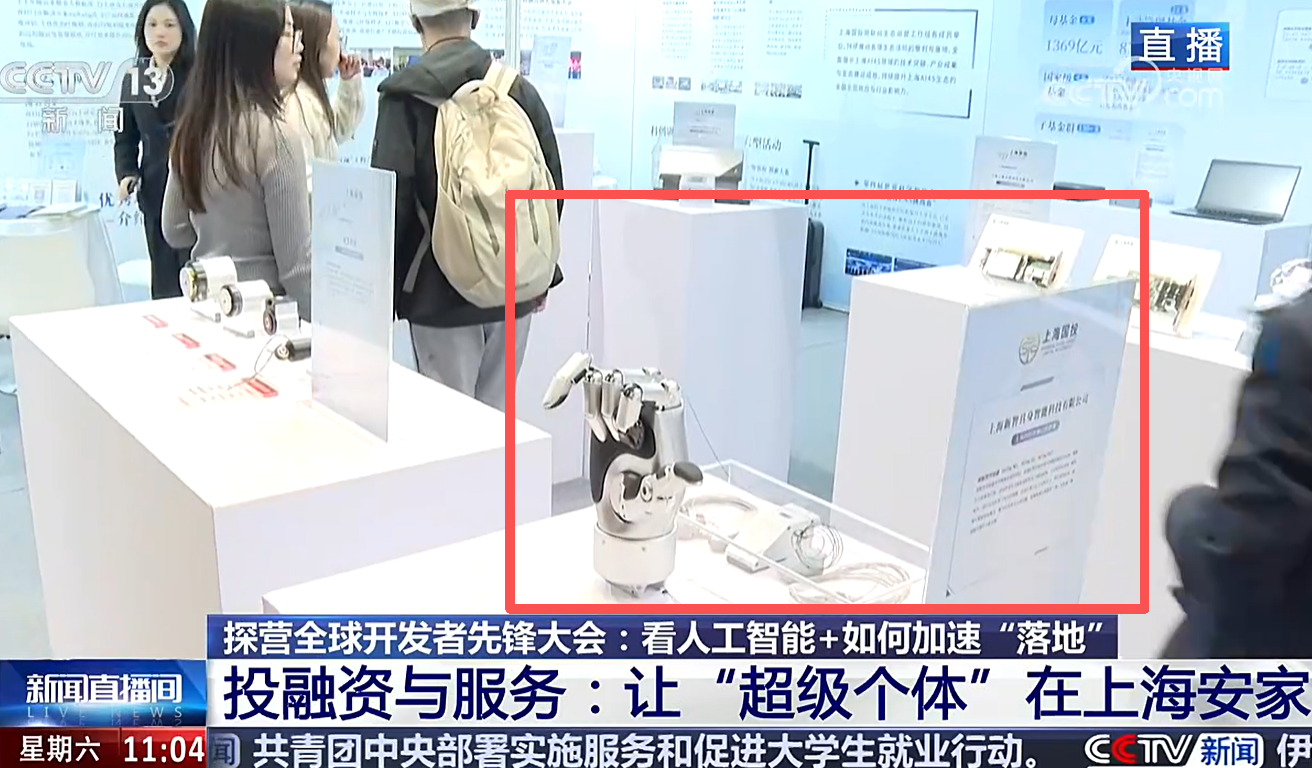
Live Coverage of GDPS 2026 by CCTV-13 News Channel
At the summit, NeoteAI presented its core portfolio of independently developed visual-tactile sensors.
Powered by the company's proprietary technology framework, the InTac series delivers four key technological capabilities. The sensors feature ultra-high spatial resolution and sensing sensitivity, support high-precision multidimensional force detection, and can be easily integrated with a variety of mainstream robotic grippers, enabling more advanced tactile interaction and dexterous manipulation.
Key Technology Highlights
·Pixel-Level Microscopic Perception
Breaking through the limitations of conventional tactile sensing, the sensors offer ultra-high pixel-level spatial resolution.
They can accurately capture surface textures and complex contact contours, enabling high-precision 3D reconstruction of object surfaces through tactile sensing, even in complete darkness.
·Low-Cost, Low-Power Design
By adopting a simplified structural design and energy-efficient circuitry, the sensors significantly reduce component costs and operating power consumption while maintaining extremely low force detection thresholds.
These capabilities enable precise, compliant grasping of delicate and fragile objects.
·Real-Time Multidimensional Force Decoupling
The sensors provide high-precision, spatially distributed force feedback, enabling real-time decoupling of normal and shear forces.
They can accurately detect potential slippage and friction conditions, providing reliable physical interaction data for dexterous robotic hand manipulation.
·AI-Powered Intelligent Calibration
Built-in AI calibration algorithms effectively address nonlinear response and hysteresis issues commonly associated with conventional tactile sensors.
This ensures consistent and stable sensing data across different sensor units and over extended periods of operation.

InTac M1 and InTac S1 Visual-Tactile Sensors
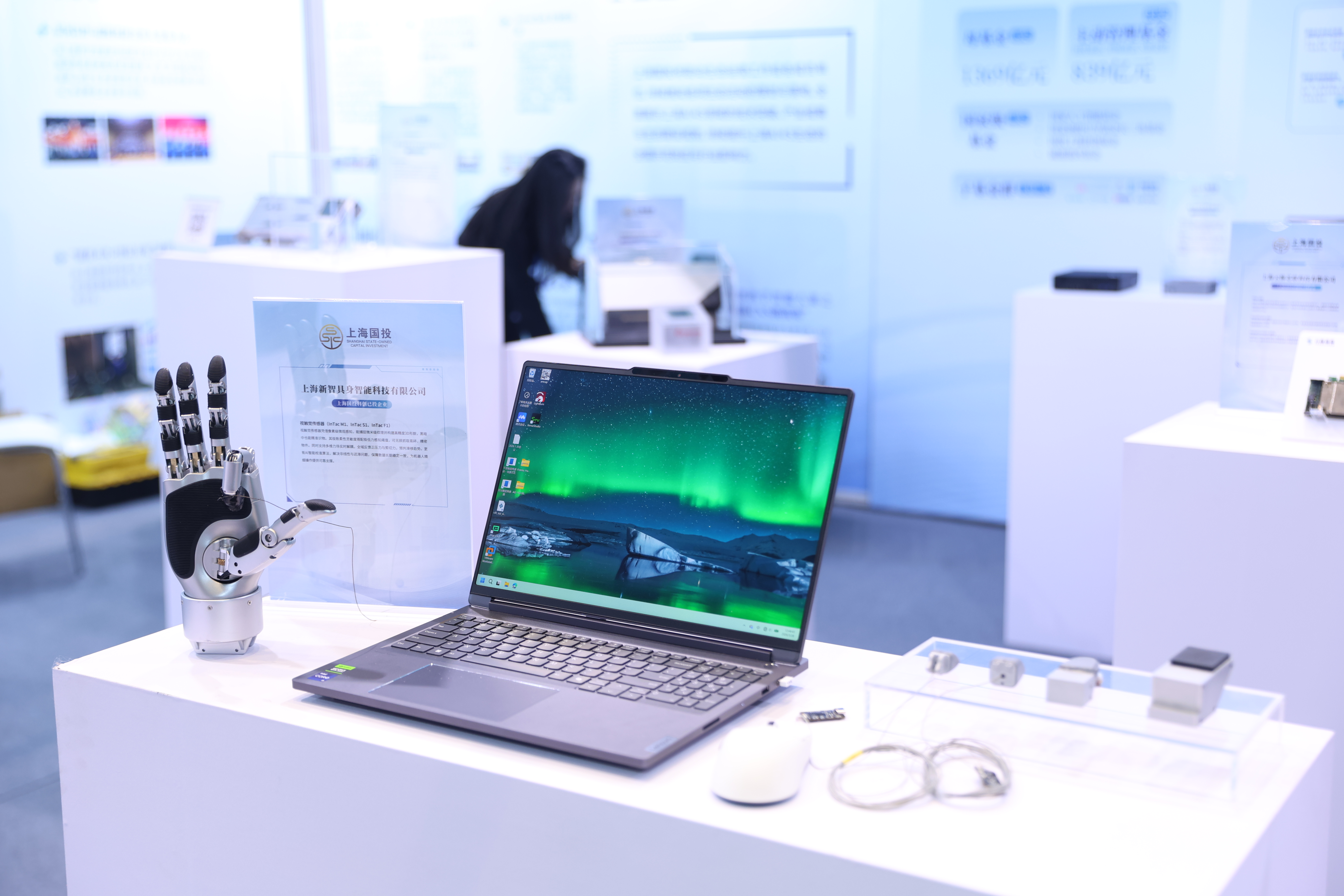
InTac F1 Integrated with a Dexterous Robotic Hand
NeoteAI's participation in GDPS 2026 represented not only another comprehensive showcase of its technological achievements, but also an important step toward deepening industrial ecosystem partnerships and accelerating large-scale technology deployment.
Throughout the summit, the company engaged in extensive discussions with robotic hardware manufacturers, system integrators, industry developers, and research institutions, reaching multiple preliminary cooperation agreements.
According to a NeoteAI representative at the event, 2026 marks a critical year for embodied AI as the industry transitions from technology demonstrations toward large-scale real-world deployment.
Tactile perception is a key enabling technology for robots to overcome the challenges of dexterous manipulation in the physical world.
Looking ahead, NeoteAI will continue to advance the development of visual-tactile sensing technologies and the training of embodied AI foundation models.
The company will further optimize product performance and adaptability across application scenarios while strengthening collaboration with upstream and downstream partners throughout the industrial value chain.
By accelerating the large-scale adoption of domestically developed visual-tactile sensing technologies across industrial and everyday applications, NeoteAI aims to contribute to the development of an independently developed and controllable core technology ecosystem for China's embodied AI industry.